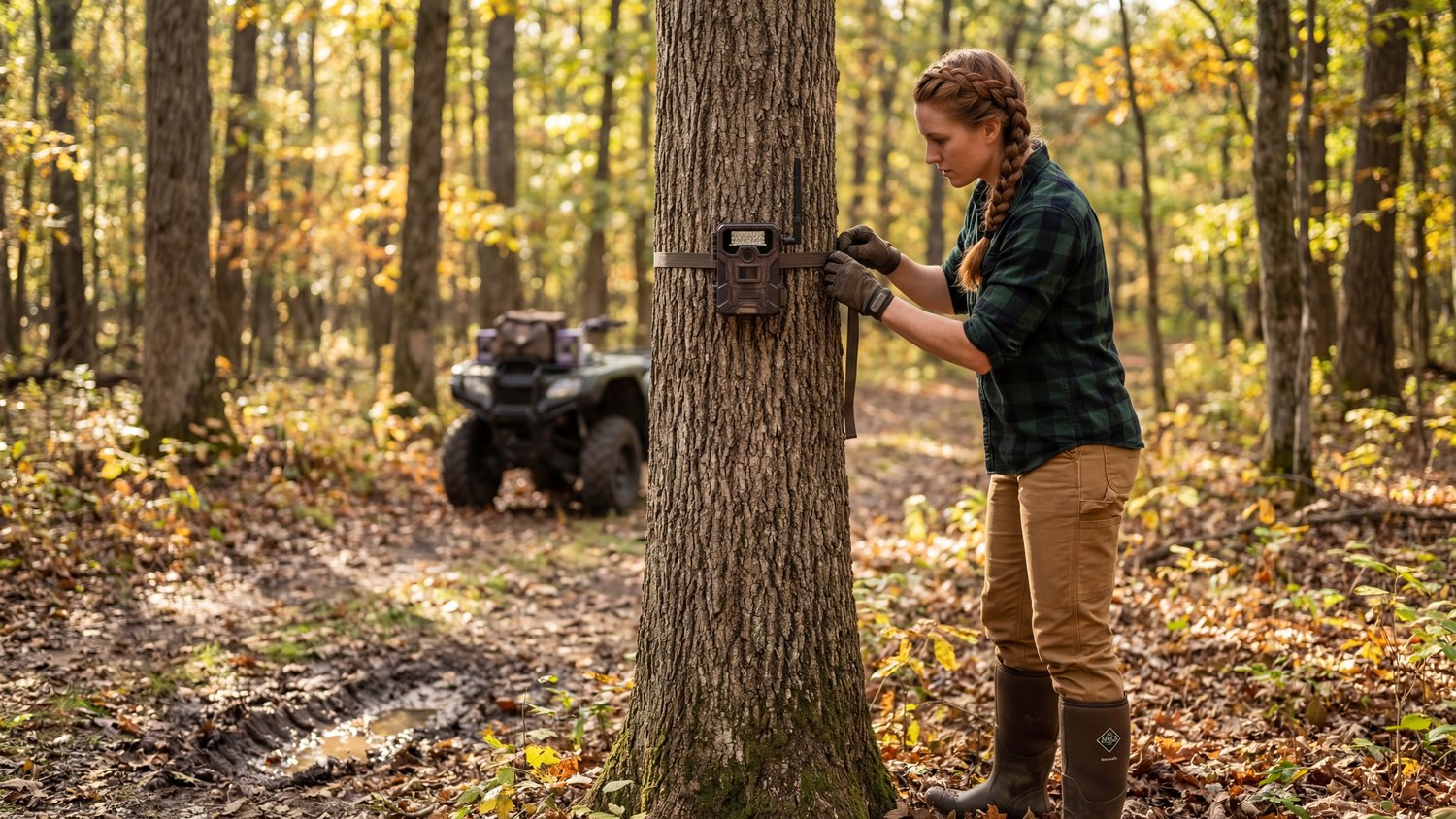
What is the best trail camera for 2026?
The Tactacam Reveal X 2.0 ($99 street) is the best overall cellular trail camera — 86/100 from TrailCamPro with outstanding photo quality (92/100) and 6.5-month battery life on lithiums. For non-cellular, the Browning Strike Force Pro X 1080 ($140) scored 90/100 with a 0.18-second trigger and 22.5-month battery life.
What is the best trail camera for 2026?
The Tactacam Reveal X 2.0 ($99 street) is the best overall cellular trail camera — 86/100 from TrailCamPro with outstanding photo quality (92/100) and 6.5-month battery life on lithiums. For non-cellular, the Browning Strike Force Pro X 1080 ($140) scored 90/100 with a 0.18-second trigger and 22.5-month battery life.
Key Takeaways
- The Tactacam Reveal X 2.0 leads on photo quality (92/100) and battery life (6.5 months) but has a real deer-spooking issue with its low-glow flash
- Trigger speed matters more than megapixels — the Browning Pro X 1080 triggers in 0.18 seconds vs. the Bushnell CelluCORE at 0.64 seconds
- Spypoint is the only brand with a free cellular plan (100 photos/month) — everyone else starts at $5-$10/month
- Lithium AAs outperform alkaline in every trail camera, especially in cold weather — budget for them
- Camera placement matters more than which camera you buy — read our placement guide before spending a dollar
This article contains affiliate links. As an Amazon Associate I earn from qualifying purchases. I only recommend products I've personally used.
I run 20+ trail cameras year-round across properties in Indiana, Idaho, and Alaska. Some cost me under $60. Others cost more than my first rifle. After 15 years of buying, breaking, and replacing these things, here is what I know: the best trail camera is the one that does its job without you babysitting it.
That means it triggers fast, takes sharp photos, does not eat batteries like candy, and -- if it is cellular -- actually sends the photos when it says it will.
I cross-referenced my field results with lab testing from TrailCamPro (the most thorough independent testing I have found), real hunter feedback from Rokslide, Archery Talk, and Michigan Sportsman forums, plus expert reviews from Outdoor Life and Field & Stream. Where a camera scores well in a lab but hunters hate it in the field, I trust the field. For all our trail camera content in one place, visit the trail camera hub.
Quick Picks: Best Trail Cameras at a Glance
- Best Overall Cellular: Tactacam Reveal X 2.0 — 86/100 TrailCamPro, 92/100 photo quality, 6.5-month battery life ($99)
- Best Standard (Non-Cellular): Browning Strike Force Pro X 1080 — 90/100, 0.18s trigger, 22.5-month battery ($140)
- Best Value Cellular: Moultrie Edge 3 — Outdoor Life "Best Value" pick, GPS, AI species ID ($80-$100)
- Best Free Plan: Spypoint Flex-Dark — Free 100 photos/month, switchable no-glow flash ($120)
- Best Budget Cellular: Bushnell CelluCORE 20 — Decent photos for the money, dual-SIM option available (~$100)
- Best Premium Standard: Reconyx HyperFire 2 — 0.20s trigger, 16-month battery, built to last a decade ($400)
- One to Avoid: Stealth Cam Fusion X — 68.6-second recovery time makes it a dealbreaker
What Actually Matters in a Trail Camera
Marketing specs on trail camera boxes are half fiction. Here is what I pay attention to after years of running these things.
Trigger Speed
Time from motion detection to shutter. Anything under half a second is acceptable. Under a quarter second is excellent. The Browning Pro X 1080 triggers in 0.18 seconds. The Bushnell CelluCORE 20 takes 0.64 seconds. That gap is the difference between a full-body broadside photo and a picture of a deer butt leaving the frame.
Recovery Time
How long before the camera can take another photo. This is the spec manufacturers bury. The Stealth Cam Fusion X takes 68.6 seconds between shots -- over a minute where any following deer walks through invisible. The Browning recovers in 0.6 seconds. If you are monitoring a trail where multiple deer pass in sequence, recovery time matters more than trigger speed.
Detection Range and Angle
Most cameras claim 80-100 foot detection. Real-world performance depends on temperature differential between the animal and the air. The Tactacam Reveal X 2.0 tests at 60 feet actual vs. 96 feet advertised. The Browning tests at 50 feet vs. 100 feet advertised. Cold mornings are great for detection. Hot August afternoons when air temp matches body temp? Range drops by half.
Megapixels Are Mostly a Lie
A camera that claims 36MP or 40MP is interpolating -- the actual sensor is much smaller. The Reconyx HyperFire 2 shoots at 3 true megapixels and takes better photos than cameras claiming 36MP. What matters is lens quality, sensor size, and low-light performance. I would take a sharp 16MP image over a mushy 40MP image every time.
Battery Life
The spread here is enormous. The Browning Pro X 1080 runs 22.5 months on 6 AA lithiums. The Tactacam Reveal X 2.0 runs 6.5 months on 12 AA lithiums. The Spypoint Flex scored 50/100 on battery from TrailCamPro -- some users report burning through 8 AAs in as few as 4 days in high-traffic areas. Lithium batteries outperform alkaline in every trail camera, especially in cold weather. Budget for them.
Flash Type: No-Glow vs. Low-Glow
This matters more than most people realize. Multiple hunters on Rokslide report that the Tactacam Reveal X 2.0 low-glow flash visibly startles deer -- "head jerked up, stopped in their tracks." Some say mature bucks avoid the cameras entirely. No-glow cameras (like the Spypoint Flex-Dark or Browning Dark Ops) produce zero visible light. If you are running cameras within 200 yards of a stand, no-glow is worth the upgrade. Our guide on how to manage cameras without educating deer covers this in detail.
Cellular vs. Standard -- Which Do You Need?
Go cellular if: You hunt the areas where cameras are placed, cell coverage exists on your property, and you can justify $5-$13/month per camera. Reducing intrusion is the single biggest advantage. Read our cellular vs. standard trail camera comparison for a deeper breakdown.
Go standard if: Cameras are for general inventory on areas you do not hunt, cell service is weak or nonexistent, or you are on a tight budget and want maximum cameras deployed.
The 7 Best Trail Cameras for 2026
1. Tactacam Reveal X 2.0 -- Best Overall Cellular ($99)
The Reveal X 2.0 scored 86/100 from TrailCamPro with outstanding photo quality (92/100) and the best battery life in the cellular category at 6.5 months on 12 AA lithiums. That battery number is not marketing -- TrailCamPro tested it at 35 photos per day with a resting power draw of only 2.7 milliwatts. Forum users on Rokslide confirm 3+ months with 500-1,000 images per camera on Energizer lithiums.
The dual-carrier design works on both AT&T and Verizon (same unit, SIM swap -- not separate SKUs). Setup is straightforward and multiple reviewers call it "incredibly easy." The Old Deer Hunters called it "one of my favorite trail cameras" with "all the features I want without breaking the bank."
The photo quality genuinely impressed me. Daytime images are sharp and well-exposed. Nighttime photos are clear enough to identify individual bucks by antler characteristics at reasonable distances. The 6mm f/2.0 lens with roughly 49-degree field of view captures a good swath of trail.
Now the honest part. The trigger speed tests at 0.52 seconds -- adequate but not fast. The detection angle is a narrow 34.1 degrees (vs. 45 advertised), and the 27-second recovery time means follow-up deer in a group can slip through unseen. But the biggest issue is the flash.
Multiple hunters on Rokslide report deer visibly startled by the low-glow IR flash. Direct quote: deer "head jerked up, stopped in their tracks" and some bucks "avoid the Reveal X 2.0 like the plague." This is a real concern if you are running these near your best stands. For monitoring food plots or general inventory where spooking is less critical, it is not a dealbreaker.
One more thing: Tactacam has released the Reveal X 3.0 and Reveal Ultra since the 2.0. Major publications like Outdoor Life and Field & Stream have moved on to recommending the newer models. The 2.0 is still available and still a solid value buy at $99, but if the 3.0 is available near the same price, go with that instead.
Key specs: 16MP (interpolated), 720p video, 0.52s trigger, 60 ft tested detection, low-glow IR, 4G LTE dual-carrier, IP66 waterproof. Plans: $5/mo (250 photos), $8/mo (500), $13/mo (unlimited).
Pros:
- Best photo quality in the cellular category (92/100 from TrailCamPro)
- Outstanding 6.5-month battery life on lithium AAs
- Reliable dual-carrier connectivity -- gets signal where phones fail
- Easy setup, solid app, GPS tagging
Cons:
- Low-glow flash spooks deer -- multiple field reports confirm this
- 0.52s trigger is not fast for the price -- you will miss some shots
- 27-second recovery time between photos
- No free plan -- minimum $5/month per camera
Tactacam Reveal X 2.0 Cellular Trail Camera
Best overall cellular camera. 86/100 TrailCamPro score, 92/100 photo quality, 6.5-month battery life. Street price around $99.
Check Price on Amazon →2. Browning Strike Force Pro X 1080 -- Best Standard ($140)
The Strike Force Pro X 1080 scored 90/100 from TrailCamPro -- the highest-scoring camera on this list. Its detection circuit earned a 95/100, which TrailCamPro described as "absolutely nothing to complain about here. You get all the speed you could ask for."
The numbers back that up. The trigger fires in 0.18 seconds with a 0.6-second recovery. That is functionally instantaneous -- you will get the whole deer in frame, and if a second deer follows two seconds later, you will get that one too. Compare that to the Bushnell CelluCORE 20 at 0.64 seconds with 40-second recovery. On a trail where deer pass single-file, the Browning captures every animal. The Bushnell might catch every third one.
Battery life is elite: 22.5 months in photo mode on 6 AA lithiums. That is nearly two years from one set of batteries. I mark install dates on every camera and the Browning consistently lasts longer than anything else I run.
The camera upgraded from the older HD Pro X with true 1080p video (up from 900p), a wider 57.8-degree field of view, and the new Radiant 6 flash system with Illuma-Smart auto-adjustment. Build quality is solid -- compact at 4.25 x 3.75 x 3.25 inches with an all-steel adjustable mount bracket. I have had Strike Force cameras survive being knocked off trees by cattle, sitting in standing water after floods, and freezing temps in Idaho.
One important correction from the previous version of this article: the Pro X 1080 uses a low-glow (red glow) flash, not no-glow. If you need invisible flash for pressured deer near stands, look at the Browning Dark Ops Pro X 1080 for about $20 more. Same camera, truly invisible flash.
Key specs: 24MP (interpolated), 1080p video with audio, 0.18s trigger, 0.6s recovery, 50 ft tested detection at 57.8-degree FOV, low-glow IR, 6 AA batteries (22.5 months), up to 512GB SD.
Pros:
- 95/100 detection score -- fastest trigger on this list at 0.18 seconds
- 22.5-month battery life is best-in-class for any trail camera
- 0.6-second recovery means you capture every deer in a group
- Compact, durable build with 1.5-inch color viewer
Cons:
- Low-glow flash (not no-glow) -- the Dark Ops version is truly invisible
- Temperature stamp on photos is consistently inaccurate
- Some users report false triggers in direct sunlight (see our false trigger settings guide)
- No cellular option -- you must retrieve the SD card
Browning Strike Force Pro X 1080 Trail Camera
90/100 TrailCamPro. Fastest trigger (0.18s), longest battery (22.5 months), and a 95/100 detection score. The best non-cellular camera you can buy for $140.
Check Price on Amazon →3. Moultrie Edge 3 -- Best Value Cellular ($80-$100)
Outdoor Life named the Edge 3 their "Best Value" cellular trail camera, and Field & Stream called it "the best value camera Moultrie has to offer." At $99.99 MSRP (frequently on sale for $79.99), it packs features that used to require $150+ cameras: 40MP photos, GPS, AI-powered species identification, and a Live Aim feature that lets you see what the camera sees in real-time while positioning it.
The Edge 3 connects to all four major carriers automatically -- no choosing between AT&T and Verizon models. The Moultrie Mobile app is genuinely good, with onX mapping integration, species filtering, and Moultrie feeder integration if you run their feeders. Setup is QR code based and takes minutes.
AllOutdoor tested it and reported 96% battery remaining after 2.5 months, calling the night photos "the best I have ever seen from a trail camera in this price range." User reviews on Moultrie.com sit at 4.8/5 from 235 reviews, which is unusually high for a trail camera.
The catch: no SD card slot. The Edge 3 stores photos internally and transmits via cellular only. Without an active data plan, this camera is a paperweight. That is a fundamental design choice some hunters hate. Plans start at $9.99/month (Standard, ~1,000 photos) or $12.99/month annually for unlimited. There is no free tier like Spypoint offers.
Trigger speed is 0.50 seconds -- adequate but nothing special. If you need a fast trigger, the Browning or Spypoint are better choices. But for food plot monitoring, feeder sites, and general inventory at this price, the Edge 3 is hard to beat.
Key specs: 40MP, 1080p video, 0.50s trigger, 100 ft detection, 50-degree FOV, low-glow flash, GPS, AI species ID, USB-C charging, all-carrier auto-connect.
Pros:
- Outdoor Life "Best Value" pick -- loaded with features at $80-$100
- 4.8/5 stars from 235 user reviews
- Excellent battery life -- 96% remaining after 2.5 months in testing
- AI species filtering, GPS, Live Aim positioning, onX maps integration
Cons:
- No SD card slot -- mandatory subscription or the camera is useless
- Plans start at $9.99/month (no free tier)
- 0.50s trigger speed is slower than Tactacam, Browning, or Spypoint
- Low-glow flash, not no-glow
Moultrie Edge 3 Cellular Trail Camera
Outdoor Life "Best Value" pick. 40MP, GPS, AI species ID, and all-carrier connectivity for $80-$100. Requires data plan -- no SD card fallback.
Check Price on Amazon →4. Spypoint Flex-Dark -- Best Free Plan ($120)
Spypoint is the only major trail camera brand that offers a genuinely free cellular plan -- 100 photos per month, no credit card required, no trial period. If you run cameras on low-traffic spots (gate monitoring, property boundary, seasonal food plots), you might never pay a subscription at all.
The Flex-Dark replaces the older Flex-G36 (which is now out of stock on Spypoint.com). The upgrade is meaningful: 40MP vs. 36MP, and a switchable no-glow/low-glow flash you can toggle from the app. That switchable flash is a genuine differentiator -- run low-glow for better night range on inventory cameras, switch to no-glow near stands where you do not want deer seeing the flash.
Trigger speed is 0.3 seconds with 100-foot detection range -- both solid numbers. Grand View Outdoors tested it over multiple seasons and confirmed detection range exceeded Spypoint's claims. The dual-SIM auto-connectivity scans for the strongest carrier automatically.
The Spypoint app remains one of the best in the business. QR code activation, clean interface, species recognition AI, and the whole process from unboxing to first photo takes minutes. Paid plans run $5/month (250 photos) up to $15/month (unlimited), with annual discounts.
The downside is battery life. TrailCamPro scored the Flex line 50/100 on battery. Forum users on HuntingPA report burning through batteries fast, and some report reliability issues with cameras failing after 18-24 months. The hardware is not as tank-like as the Browning or Reconyx. If your cameras live in wet environments year-round, factor that in.
Key specs: 40MP, 1080p video with audio, 0.3s trigger, 100 ft detection/flash range, switchable no-glow/low-glow IR, dual-SIM LTE, GPS, IP65, 8 AA batteries.
Pros:
- Free 100-photo monthly plan -- no other major brand offers this
- Switchable no-glow/low-glow flash from the app
- 0.3-second trigger and 100-foot detection range
- Best setup experience and one of the best apps in the market
Cons:
- Battery life scored 50/100 -- plan on frequent swaps or a solar panel
- Durability and longevity concerns -- some users report failures after 18-24 months
- 100 free photos fills fast on active trails -- you will likely need a paid plan
- IP65 (not IP66) -- less water resistance than Tactacam
Spypoint Flex-Dark Cellular Trail Camera
Only major brand with a free cellular plan. 40MP, switchable no-glow flash, 0.3s trigger, dual-SIM. $119.99.
Check Price on Amazon →5. Bushnell CelluCORE 20 -- Best Budget Cellular (~$100)
The CelluCORE 20 scored 82/100 from TrailCamPro. Outdoor Life called it "one of the best buys in cell cams." At around $100, it is one of the cheapest name-brand cellular cameras you can buy, and the photo quality (88/100) is genuinely good for the price.
The dual-SIM variant (model 119904D) connects to both AT&T and Verizon and auto-selects the stronger signal. On properties with marginal cell coverage, that dual-carrier option can mean the difference between getting photos and staring at "no signal." Battery life is decent at 4.3 months on 12 AA lithiums with a 12V external jack for extended deployments.
Here is where I have to be honest: the detection circuit is weak. Outdoor Life field testing found it failed to trigger at 60-100 feet in daylight. TrailCamPro measured the detection angle at just 33.8 degrees. In my experience, this camera works reliably inside 40-50 feet and gets progressively worse beyond that. If your camera is covering a food plot where deer are 20 feet away, it is fine. On a long trail crossing, you will miss animals.
Build quality is a concern. Multiple users on Rokslide reported water leakage within the first two months. One was defective out of the box. Customer support was described as "nearly non-existent" with unanswered emails spanning months. This is not a camera you deploy and forget in harsh conditions.
The plans are straightforward but not cheap: $9.99/month for 2,000 photos or $14.99/month unlimited. No free tier. For context, Tactacam starts at $5/month and Spypoint offers 100 free photos.
Key specs: 20MP (interpolated), 1080p video, 0.64s trigger, 40.3s recovery, 80 ft detection, 33.8-degree detection angle, low-glow IR, 12 AA batteries (4.3 months), up to 32GB SD.
Pros:
- Good photo quality for the price (88/100 from TrailCamPro)
- Dual-SIM option gets signal in marginal coverage areas
- ~$100 street price makes it accessible
- 4.3-month battery life is adequate with 12V external jack option
Cons:
- Weak detection circuit -- fails beyond 40-50 feet in real conditions
- 0.64-second trigger is slowest on this list
- Water leakage reported by multiple users
- Customer support is poor -- expect slow or no responses
Bushnell CelluCORE 20 Cellular Trail Camera
Cheap and decent photos, but weak detection and build quality concerns. Dual-SIM option available for marginal coverage areas. Around $100.
Check Price on Amazon →6. Reconyx HyperFire 2 -- Best Premium Standard ($400)
The HyperFire 2 scored 88/100 from TrailCamPro with best-in-class night photos, a 0.20-second trigger with 0.20-second recovery, and a battery life of 16.6 months (approximately 40,000 photos) on 12 AA lithiums. It is built in the USA, comes with a 5-year warranty (longest in the industry), and there are users on hunting forums with original HyperFire cameras still running after 15 years.
The trigger and recovery speed combination is what sets this camera apart. At 0.20 seconds each, it is essentially capturing continuously. Nothing walks through the detection zone without getting photographed, and it is ready for the next animal almost instantly. TrailCamPro consistently ranks it among the top cameras for detection in their annual shootouts.
I have to be straightforward about the elephant in the room: it shoots at 3 true megapixels with 720p video. In 2026, that resolution is badly dated. You will get sharp, well-exposed images -- Reconyx lenses and sensors are genuinely excellent -- but they will be noticeably lower resolution than a $100 camera. Multiple users on hunting forums describe the image quality as "mediocre" compared to modern cameras, and the video is a disappointment.
The other issue: the HyperFire 2 is going out of stock everywhere. TrailCamPro shows all variants unavailable. The official Reconyx product page now 404s. You can still find them through Amazon third-party sellers and remaining stock at specialty retailers, but this camera is at end-of-life. The successor is the HyperFire 4K at $545, which brings 8MP photos, true 4K video, and 0.25-second trigger speed.
Should you buy one? If you find one at a reasonable price and you need a camera for an extremely remote location where battery life and reliability matter more than resolution -- backcountry Alaska, multi-month deployments, bear country -- the HyperFire 2 is still a legitimate choice. For everyone else, the Browning Pro X 1080 gives you 90% of the performance at one-third the price.
Key specs: 3MP (true, non-interpolated), 720p video, 0.20s trigger, 0.20s recovery, 80 ft detection at 40.9 degrees, low-glow IR (150 ft flash range), 12 AA batteries (16.6 months), up to 512GB SD, 5-year warranty, Made in USA.
Pros:
- 0.20-second trigger with 0.20-second recovery -- nothing gets past it
- 16.6-month battery life on lithiums (best on this list)
- Best-in-class night photo quality from TrailCamPro testing
- Tank-like build quality -- cameras last 10-15 years
- 5-year warranty, Made in USA
Cons:
- 3MP photos and 720p video are badly dated for 2026
- $400 is hard to justify when the Browning scores 90/100 at $140
- Going out of stock everywhere -- effectively end-of-life
- Confusing menu system that multiple users call "difficult to program"
Reconyx HyperFire 2 Trail Camera
The buy-it-once camera. 0.20s trigger, 16-month battery, 5-year warranty. Resolution is dated but reliability is unmatched. $400 while supplies last.
Check Price on Amazon →7. Stealth Cam Fusion X -- One to Avoid
I included the Fusion X in a previous version of this article as the "Best Budget Cellular" pick. After deeper research, I am pulling that recommendation. Here is why.
The Fusion X scored 74/100 from TrailCamPro -- lowest on this list by a wide margin. The trigger tests fast at 0.21 seconds, and photo quality is decent (84/100). At $79-$99, the price looks right. So what is the problem?
The recovery time is 68.6 seconds. Over a full minute between photos. On a trail where three deer walk through in sequence, you photograph the first one and miss the next two entirely. For inventory purposes -- trying to count deer on your property -- that is a fatal flaw. Forum users on Rokslide describe it as "flat out missing" deer and getting "maybe 30% of the actual traffic."
Battery life scored 50/100 from TrailCamPro, with real-world performance around 1.5 months on lithium AAs. Multiple forum users report cameras bricking during firmware updates, connectivity dropping randomly, and customer service hold times of 1-2 hours.
The camera has been superseded by the Fusion X-Pro (dual-carrier, 36MP) and the Fusion MAX 3.0 (2026 model with AI false-image detection and built-in charging). If you want a Stealth Cam product, look at the newer models. But at the $80-$100 price point, the Moultrie Edge 3 or Spypoint Flex-M are both better cameras.
Key specs: 26MP, 1080p video, 0.21s trigger, 68.6s recovery, 80 ft detection, 46.6-degree detection angle, low-glow IR, 8 AA batteries (~1.5 months), AT&T or Verizon models (separate SKUs).
Why I pulled it:
- 68.6-second recovery time misses the majority of deer on active trails
- Battery life scored 50/100 -- expect monthly battery swaps
- Firmware update failures can brick the camera
- Superseded by Fusion X-Pro and Fusion MAX 3.0
- Customer service described as "absolutely abysmal" on forums
Trail Camera Comparison Table
| Camera | Type | TrailCamPro Score | Trigger Speed | Recovery | Battery Life | Street Price |
|---|---|---|---|---|---|---|
| Browning Pro X 1080 | Standard | 90/100 | 0.18s | 0.6s | 22.5 months | $140 |
| Reconyx HyperFire 2 | Standard | 88/100 | 0.20s | 0.2s | 16.6 months | $400 |
| Tactacam Reveal X 2.0 | Cellular | 86/100 | 0.52s | 27s | 6.5 months | $99 |
| Bushnell CelluCORE 20 | Cellular | 82/100 | 0.64s | 40.3s | 4.3 months | $100 |
| Spypoint Flex-Dark | Cellular | 78/100* | 0.30s | N/A | ~2 months | $120 |
| Moultrie Edge 3 | Cellular | N/A** | 0.50s | N/A | Excellent | $80-$100 |
| Stealth Cam Fusion X | Cellular | 74/100 | 0.21s | 68.6s | ~1.5 months | $79-$99 |
*Spypoint score based on Flex-G36 testing; Flex-Dark is the updated model. **Moultrie Edge 3 not yet reviewed by TrailCamPro; rated "Best Value" by Outdoor Life and 4.8/5 by users.
Cellular Plan Pricing Compared
The camera is the upfront cost. The subscription is the long-term cost. Over two years, plan fees can exceed what you paid for the camera. Here is how the major brands compare:
| Brand | Free Tier | Basic Plan | Unlimited Plan | Annual Savings |
|---|---|---|---|---|
| Spypoint | 100 photos/mo | $5/mo (250 photos) | $15/mo | ~20% off |
| Tactacam | None | $5/mo (250 photos) | $13/mo | Yes |
| Stealth Cam | None | $5/mo (650 photos) | $20/mo first cam | ~50% off |
| Moultrie | None | $9.99/mo (1,000 photos) | $16.99/mo | ~$13/mo annual |
| Bushnell | None | $9.99/mo (2,000 photos) | $14.99/mo | Not confirmed |
Running 5 cameras for a year: At Tactacam's unlimited rate ($13/mo x 5 cameras x 12 months), that is $780 in annual subscription fees. Spypoint with the free tier on 2 low-traffic cameras and $5/month on 3 active cameras costs $180/year. The plan pricing should factor into your buying decision as much as the camera price.
Cellular vs. Standard: How I Run My Setup
I run about 60% cellular, 40% standard across my properties. Here is how I deploy them:
Cellular cameras go on: Food plots, funnels within 200 yards of stands, scrape lines I actively hunt over, and any spot where checking an SD card means leaving scent in a critical area. The whole point is reducing pressure. Every time you walk in to check a card, you leave scent and disturb the area.
Standard cameras go on: Property boundaries, timber inventory spots, areas with no cell coverage, and any location where I am gathering data but not actively hunting. The Browning Pro X 1080 is my standard camera of choice -- set it in March, pull the card in November, 22.5 months of battery means I never worry about it dying.
The math: Five cellular cameras at $13/month unlimited (Tactacam) costs $780/year. That is real money. But if those five cameras help me pattern one mature buck I would not have seen otherwise, it paid for itself. If checking SD cards would have bumped that buck off the property, it is not even a close call.
Real Talk on Trail Camera Marketing
Every trail camera box claims the fastest trigger speed and longest detection range in the industry. The Tactacam claims 96-foot detection -- it tests at 60. The Browning claims 100 feet -- tests at 50. The actual detection angle is always narrower than advertised. Take published specs with a grain of salt and trust field results -- either yours or from someone like TrailCamPro who actually measures this stuff in a controlled environment.
Trail Camera Accessories Worth Buying
A few accessories that make trail camera management significantly easier:
Energizer Lithium AA Batteries (24-Pack)
Lithium batteries last dramatically longer than alkaline in trail cameras -- the Browning goes from "long" to "22.5 months" on lithiums vs. alkaline. They hold voltage more consistently and perform in cold weather where alkaline batteries crater. Do not run alkaline in a trail camera.
Check Price on Amazon →SanDisk 32GB SD Cards (5-Pack)
Reliable SD cards that will not corrupt and lose your photos. I keep extras in my truck so I can swap and go without waiting at cameras. The Tactacam requires Class 10, U3, minimum 90 MB/s -- SanDisk Ultra or Extreme meets that spec.
Check Price on Amazon →Trail Camera Security Box
Steel lockbox protects your investment from theft and bear damage. Essential if your property borders public land or high-traffic areas. Match the box to your camera model -- they are not universal.
Check Price on Amazon →Frequently Asked Questions
How many trail cameras do I need for my property?
One camera per 10-15 huntable acres, concentrated on funnels, food sources, and travel corridors. A 100-acre property with a mix of timber and fields typically runs well with 6-10 cameras. Start with fewer in the best spots and add cameras as you learn the property. Five cameras in perfect locations will teach you more than fifteen scattered randomly.
Are cellular trail cameras worth the monthly cost?
For cameras on or near your hunting areas, absolutely. Plans range from free (Spypoint, 100 photos/month) to $13/month unlimited (Tactacam). The cost of a monthly subscription is trivial compared to the value of reduced pressure. Every time you walk in to check a card, you risk changing deer behavior. For inventory cameras on non-hunted areas, standard cameras are fine.
What is the best trail camera for the money overall?
The Browning Strike Force Pro X 1080 at $140 gives you the most performance per dollar in any trail camera -- 90/100 score, 0.18s trigger, 22.5-month battery. For cellular, the Moultrie Edge 3 at $80-$100 earned "Best Value" from Outdoor Life with GPS, AI species ID, and a 4.8/5 user rating.
Do trail camera flashes scare deer?
Low-glow (faint red flash) cameras can spook deer -- multiple Rokslide hunters report the Tactacam Reveal X 2.0 startling deer with its flash. No-glow cameras produce zero visible light and are my preference near stands. The Spypoint Flex-Dark lets you switch between low-glow and no-glow from the app, which is the most flexible option. On inventory cameras far from hunting areas, low-glow is fine.
How high should I mount a trail camera?
About three feet off the ground for deer, angled slightly downward. This puts the detection zone at body height and gives you good photos for identification. Read our complete guide to trail camera mounting height for specific setups by terrain and purpose.
How often should I check my trail cameras?
Standard cameras: every two to four weeks in summer, less frequently during hunting season. Cellular cameras: never physically unless you need to swap batteries or reposition. The whole point of cellular is staying out. If you are checking cellular cameras weekly, something is wrong with the setup.
Do I need a data plan for each cellular camera?
Yes, each cellular camera requires its own plan. Spypoint offers a free tier (100 photos/month). Tactacam and Stealth Cam start at $5/month. Moultrie and Bushnell start at $9.99/month. Multi-camera discounts are available from Stealth Cam ($8/month per camera after the third). Factor plan costs into your total budget -- five cameras at $13/month is $780/year.
Bottom Line
The trail camera market has more good options now than ever, but also more junk dressed up in marketing specs. After cross-referencing lab testing, real hunter feedback, and my own field experience, here is my actual recommendation for most landowners:
Start with the Browning Strike Force Pro X 1080 as your foundation. At $140, it has the highest TrailCamPro score on this list (90/100), the fastest trigger (0.18s), and battery life measured in years, not months. Deploy these everywhere you do not need cellular.
Add Tactacam Reveal X 2.0 cameras on food plots, funnels, and spots near stands where checking a card means leaving scent. The 92/100 photo quality and 6.5-month battery life justify the $99 price and $5-$13/month plan. Just be aware of the deer-spooking issue with the low-glow flash -- if your target buck is camera-shy, consider the Spypoint Flex-Dark with its no-glow option instead.
If budget is tight, the Moultrie Edge 3 at $80 delivers features that cost $150+ two years ago. The Spypoint Flex-Dark free plan lets you run cellular cameras with zero monthly cost on low-traffic spots.
Skip the Stealth Cam Fusion X. The 68.6-second recovery time means you are missing more deer than you are photographing. If you want a Stealth Cam product, wait for the Fusion MAX 3.0.
Whatever you buy, deploy them smart. The best camera in the world will not help if it is pointed at the wrong trail. Read my trail camera placement guide if you have not already -- where you put the camera matters more than which camera you put there. And once your cameras are running, learn how to turn that data into hunting decisions with our guide on trail camera data vs. what you see in the stand. Browse all our picks on the gear hub.
Trail Camera Setup Checklist
- Choose camera locations based on terrain features and deer sign
- Test cell coverage at each spot before mounting cellular cameras
- Mount cameras 3 feet high, angled slightly downward
- Use no-glow cameras within 200 yards of any stand
- Install lithium batteries (not alkaline)
- Format SD cards before first use
- Set photo delay to 5-10 seconds to avoid card fill
- Lock security boxes on cameras near property boundaries
- Record GPS coordinates of each camera location
- Check cameras every 2-4 weeks in off-season
