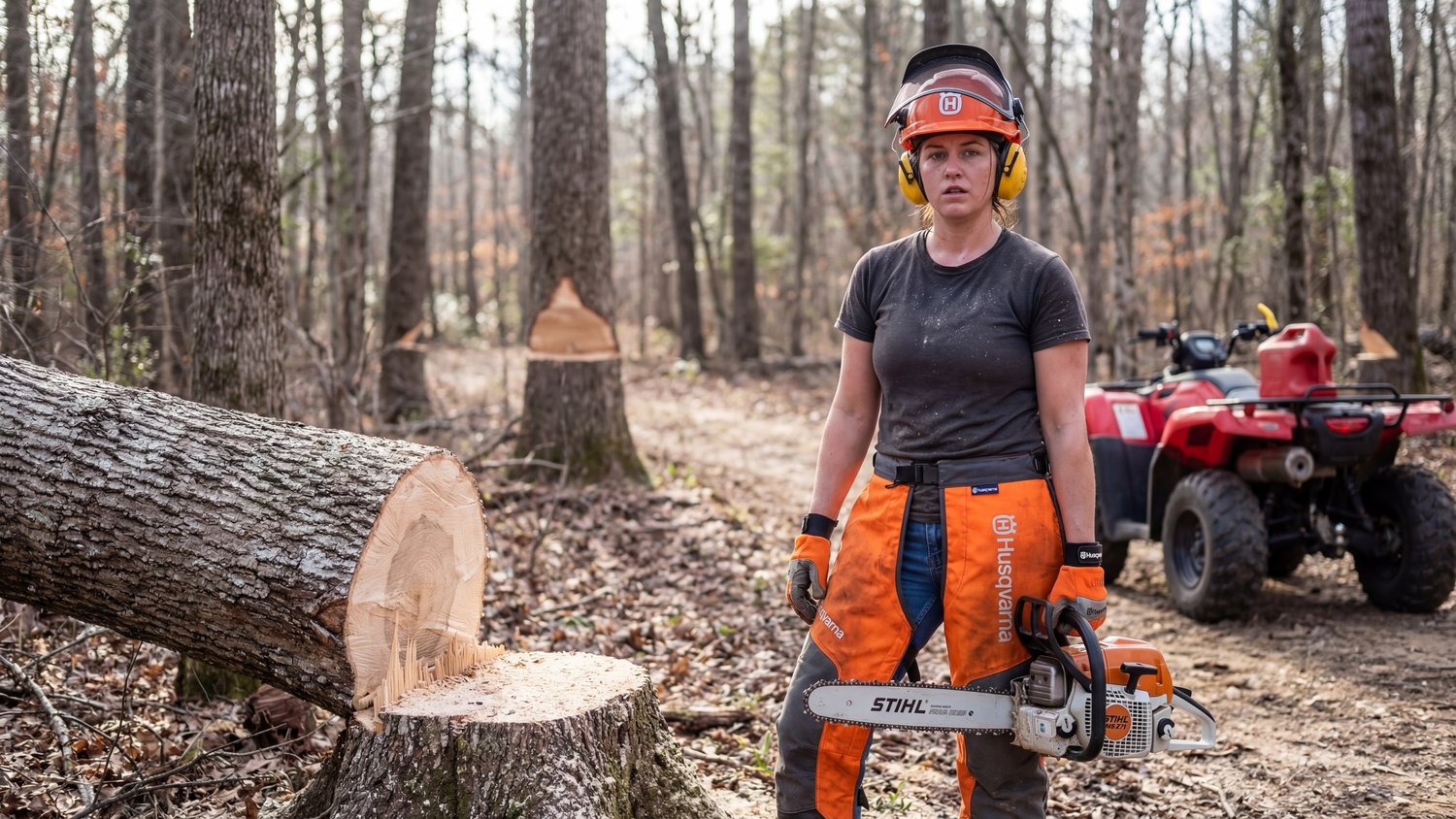
What chainsaw safety gear do I need for land work?
At minimum: chainsaw chaps (Husqvarna Technical at $145 or Forester at $55-65), a forestry helmet system with face screen and 25 dB ear muffs (Husqvarna Pro Forest ~$90), cut-resistant gloves ($35), and steel-toe boots. Total kit cost: $185-305. That's less than 10% of one ER visit for a chainsaw laceration ($3,500+ average).
What chainsaw safety gear do I need for land work?
At minimum: chainsaw chaps (Husqvarna Technical at $145 or Forester at $55-65), a forestry helmet system with face screen and 25 dB ear muffs (Husqvarna Pro Forest ~$90), cut-resistant gloves ($35), and steel-toe boots. Total kit cost: $185-305. That's less than 10% of one ER visit for a chainsaw laceration ($3,500+ average).
Key Takeaways
- Chainsaw chaps are the single most important piece — they stop 36,000+ ER-visit-causing injuries per year from being worse
- Class A (wrap-around) chaps protect the back of your legs too — pros strongly recommend them over Class B (open back)
- A complete safety kit costs $185-305 — less than 10% of a single chainsaw injury ER visit
- A dull chain is more dangerous than a sharp one — the Stihl 2-in-1 Easy File ($40-45) keeps you sharp in the field in 5 minutes
- Never run a chainsaw alone in remote areas — tell someone where you'll be and when you expect to be back
- The Stihl MS 271 Farm Boss ($530) and Husqvarna 455 Rancher ($590) are the two best landowner saws — Stihl is dealer-only, Husqvarna is on Amazon
This article contains affiliate links. As an Amazon Associate I earn from qualifying purchases. I only recommend products I've personally used.
Chainsaws are productive and unforgiving. A running chain moves at roughly 60 miles per hour. One wrong move and you're looking at stitches, nerve damage, or worse. Here's the safety kit that reduces the chances of a bad day turning into a hospital bill.
The problem isn't that people don't know safety gear exists. It's that they skip it. "I'm just making a quick cut." That's the sentence that precedes most chainsaw injuries. Habitat work, hinge cutting, clearing trails, dropping storm damage — none of it is a quick cut. Wear the gear every time you touch the saw.
The Numbers Don't Lie
Over 36,000 chainsaw injuries send people to the emergency room every year in the US. The majority happen to the legs and hands. Chainsaw chaps alone stop most leg injuries cold. The gear isn't optional--it's the difference between a close call and a life-changing accident.
Chainsaw Chaps: The Non-Negotiable
If you buy one piece of safety gear, make it chaps. They work by jamming the chain with layers of cut-resistant fiber (usually Kevlar or ballistic nylon). When a moving chain contacts the outer shell, it pulls the inner fibers into the sprocket and stops the chain in a fraction of a second. You'll ruin the chaps. You'll keep your leg.
Chaps come in different protection levels. For property work, UL-classified chaps rated for your saw's chain speed are what you want. Most consumer saws run under 3,000 FPM--standard chaps handle that fine. If you're running a professional saw, check the FPM rating.
Fit matters. Chaps should cover from your waist to the top of your boots. Too short and they leave your shins exposed. Too long and they catch on brush. Wrap-around styles protect the back of your legs too, which matters when you're working in thick stuff and branches are kicking around.
Husqvarna Technical Chainsaw Chaps — $144.99
5-layer TEK WARP protection, Class A wrap-around. 1000 Denier Polyester with PVC coating, Acetal Delrin buckles. ASTM F1897 / ANSI Z133.1 / OSHA 1910-266 certified. 4.1/5 stars on Amazon. Sizes: 36-38" and 40-42".
Check Price on Amazon →Forester Chainsaw Chaps — $55-65
12-layer protection, UL Listed Class B. 1200 Denier water/oil resistant Oxford shell. OSHA 1910.266 / ASTM F1897 certified. Adjustable waist 30-48", flip belt shortens by 2". Outdoor Life testing pick for best Class B chaps. 6"x6" pocket (Oregon competitor doesn\'t include one).
Check Price on Amazon →Helmet System: Eyes, Ears, and Skull
A proper chainsaw helmet isn't just a hard hat. It's a system: shell, face screen, and integrated hearing protection. You need all three, and buying them as a unit is cheaper and more convenient than piecing them together.
The shell protects against falling branches--and when you're dropping trees or hinge cutting, stuff falls. The mesh face screen stops chips and sawdust without fogging up like safety glasses do. And the ear muffs matter more than you think. A chainsaw runs at 100-115 decibels. That's loud enough to cause permanent hearing damage in minutes.
Don't substitute a ball cap and sunglasses. I've taken a branch to the face screen hard enough to leave a dent. Without it, that's a broken nose or lost eye.
Husqvarna Pro Forest Helmet System — ~$90
UV-protected hard hat, mesh visor, 25 dB(A) ear muffs, rain neck protector. 6-point adjustable suspension. ANSI Z89.1-2003 Class G-E-C certified. Ratchet version (592752701) is the newest model. "Stands up to loud saws like the MS500i" per forum reviews.
Check Price on Amazon →Pfanner Protos Integral Forest Helmet — $369+
THE pro arborist helmet. Integrated hearing protection that tucks under shell (won\'t snag branches), side + rear impact protection, adjustable vents, 30+ color combos, magnetic chin strap, machine-washable pads. EN 397/EN 12492/EN 352-3 certified. Optional SENA Bluetooth comms ($679 total). Overkill for occasional use but the gold standard for regular tree work.
Check Price on Amazon →Hearing Protection Beyond the Helmet
Even with helmet-mounted muffs, consider what you're actually getting for noise reduction. Helmet muffs typically provide 22-28 dB NRR. For extended cutting sessions or louder saws, you may want foam plugs underneath the muffs for double protection.
Hearing loss is cumulative and permanent. You won't notice it happening until years later when you're asking people to repeat themselves. The guys who've been running saws for 30 years without ear pro? They all wish they'd worn it.
3M WorkTunes Hearing Protector with Bluetooth
For when you're doing lighter work or want music/podcasts during brush clearing. 24 dB NRR with Bluetooth. Not a substitute for full helmet muffs during active cutting, but great for cleanup work.
Check Price on Amazon →Boots: Steel Toe with Ankle Support
Chainsaw boots exist--they have cut-resistant material built into the toe and top of the foot. For professional loggers, they're worth the investment. For landowners doing weekend habitat work, a good pair of steel-toe boots with solid ankle support covers most of the risk.
The ankle support part matters more than people realize. You're working on uneven ground, stepping over downed trees, navigating slopes. A rolled ankle while holding a running chainsaw is a nightmare scenario. Boots that lock your ankle in place prevent that.
Avoid low-cut shoes, sneakers, or anything without a solid sole. A spinning chain through a tennis shoe is as bad as it sounds.
Timberland PRO Boondock Composite Toe Work Boot
Waterproof, composite safety toe, aggressive tread for slopes and mud. An excellent all-around boot for property work that doubles as chainsaw-day footwear.
Check Price on Amazon →Gloves: Grip and Cut Resistance
Your hands are on the saw. They're the closest body part to the chain. Good chainsaw gloves have cut-resistant material on the back of the left hand (where most contact injuries happen) and grippy palms to keep the saw from slipping.
Don't use thick winter gloves or loose-fitting leather work gloves. You need dexterity to operate the controls and feel what the saw is doing. Bulky gloves reduce your control, and reduced control is how you get hurt.
Husqvarna Technical Chainsaw Gloves — $34.99
Class 1 cut protection (20 m/s) per EN 381-7. Goat leather palm, reinforced trigger finger, terry cloth thumb for wiping, reflective piping, double thumb stitching. Hook/loop wrist fastener. EN ISO 11393 / EN 388 Cat II certified.
Check Price on Amazon →First Aid Kit: Plan for the Worst
Every time you run a chainsaw, a trauma first aid kit should be within reach. Not in the truck a quarter mile away. On your ATV, on your belt, in the cargo pocket of your chaps. Chainsaw wounds bleed fast and heavy.
Your kit needs: tourniquet (learn to use it before you need it), hemostatic gauze (QuikClot or equivalent), pressure bandages, and a way to call for help. Cell coverage on rural property is often sketchy, so a charged phone in a waterproof case and knowledge of your nearest road access point are part of the kit.
The Buddy System
Never run a chainsaw alone in remote areas. If you get pinned by a tree or take a bad cut, nobody is coming to help unless they know where you are. At minimum, tell someone where you'll be working and when you expect to be back. Better yet, bring a partner.
North American Rescue IPOK (Individual Patrol Officer Kit)
Compact trauma kit with tourniquet, hemostatic gauze, and chest seal. Designed for severe bleeding--exactly what a chainsaw injury produces. Fits on a belt.
Check Price on Amazon →Chainsaw Maintenance Is Safety Gear
A dull chain is dangerous. It makes you push harder, which means less control. It heats up faster, which increases kickback risk. A sharp chain pulls itself through the wood. A dull chain fights you.
Learn to sharpen your chain in the field. A round file, a guide, and five minutes between tanks of gas keeps your chain cutting clean. Check chain tension every time you refuel--a loose chain jumps off the bar, and a chain whipping off a bar at speed is exactly as dangerous as it sounds.
Bar oil isn't optional either. Running a dry bar overheats the chain, accelerates wear, and increases friction--which increases kickback risk. If you're out of bar oil, you're done cutting for the day.
Stihl 2-in-1 Easy File Chain Sharpener — $40-45
Sharpens cutters AND lowers depth gauges simultaneously. Includes two round files, one flat file, holder, and guide. CRITICAL: Match to your chain pitch — .325" version (ASIN B00HY96EW8) fits both the Stihl MS 271 and Husqvarna 455 Rancher. 3/8" P version for smaller saws.
Check Price on Amazon →The Kickback Zone
The top quarter of the bar tip is the kickback danger zone. When that part contacts wood, the saw kicks back toward your face. Reduced-kickback chains and bars help, but the real fix is awareness. Know where your bar tip is at all times, especially during limbing and hinge cuts where branches can redirect the bar unexpectedly.
Habitat Work Has Extra Risks
Clearing trails, hinge cutting for bedding areas, and removing storm damage aren't the same as bucking firewood in the yard. The terrain is rougher, the footing is worse, and the wood is under tension in ways you can't always predict.
Hinge cuts are particularly tricky. You're leaving wood connected on purpose, which means the tree can shift, roll, or spring back. Tensioned limbs in storm damage can release violently when cut. Every cut in the woods requires thinking about where the energy goes when the wood moves. If you're doing edge habitat work or habitat improvements, you'll be in these situations regularly.
This is why the full kit matters for habitat work. Chaps for the inevitable stumble into a running saw. Helmet for the branch you didn't see. Gloves for the grip you almost lost. It all adds up.
What a Complete Kit Costs
You can outfit yourself with quality chainsaw safety gear for $185-305 total. Here's the breakdown with the products from this review:
| Item | Budget Option | Premium Option |
|---|---|---|
| Chaps | Forester Class B — $55-65 | Husqvarna Technical Class A — $145 |
| Helmet System | Husqvarna Pro Forest — ~$90 | Pfanner Protos — $369+ |
| Gloves | Husqvarna Technical — $35 | Husqvarna Technical — $35 |
| Chain Sharpener | Stihl 2-in-1 Easy File — $40-45 | Stihl 2-in-1 Easy File — $40-45 |
| Total (excl. boots) | ~$220-235 | ~$590+ |
Compare that to a single ER visit, which averages $3,500+ for a chainsaw laceration repair. The math isn't complicated.
Which Chainsaw for Land Work?
Two saws dominate the landowner market, and for good reason. Forum consensus from experienced users: "you can't go wrong either way."
Stihl MS 271 Farm Boss — $529.99 (18" bar)
50.2cc, 3.49 bhp, 12.3 lbs. Pre-separation air filtration (5x longer filter life), anti-vibration system, Made in USA. GearJunkie: "went right through hardwood like nothing." No compression release (harder starting). DEALER ONLY — not available on Amazon.
Husqvarna 455 Rancher — $589.99 (20" bar)
55.5cc, 3.5 HP, 12.8 lbs. X-Torq engine, Smart Start, decompression valve, tool-free chain tensioner, adjustable oil pump. Runs bars up to 24". Family Handyman: "powerful saw capable of nearly any task."
Check Price on Amazon →Choose the Stihl MS 271 if: budget matters, you mostly cut 18" or smaller logs, you value "Made in USA," and you have a Stihl dealer nearby. Choose the Husqvarna 455 Rancher if: you need more power for larger trees, want easier starting (decompression valve), prefer tool-free chain tensioning, or want to buy on Amazon. The 455 has ~10% more displacement and can run a 24" bar, making it more versatile for big timber and timber management work.
The Bottom Line
A chainsaw doesn't care how experienced you are. It doesn't give warnings. The chain is either cutting wood or cutting you, and the only thing between those two outcomes is the gear you're wearing. Put the chaps on for every cut. Wear the helmet. Use sharp chains. And never, ever rush.
The guys who've been running saws for decades will tell you the same thing: it's not the big dangerous tree that gets you. It's the small quick cut where you didn't bother with the gear. Don't be that story.
Once you've got your safety kit dialed in, put it to work on projects that matter: hinge cutting for bedding areas, creating edge habitat, and habitat improvements that pay off every season. For a complete seasonal plan of when to do what on your land, check our seasonal planning guide.
Frequently Asked Questions
At minimum: chainsaw chaps or pants with cut-resistant fibers, a hard hat with face screen and hearing protection, steel-toe boots (preferably with cut-resistant inserts), and leather work gloves. Chainsaw chaps are the most critical item — they jam the chain with Kevlar fibers on contact, which can prevent life-altering leg injuries. Never run a chainsaw in shorts or sneakers.
Absolutely. Chainsaw chaps have prevented more serious injuries than any other piece of safety equipment. A chainsaw chain traveling at 60 mph will cut to bone in a fraction of a second. Chaps contain multiple layers of Kevlar or ballistic nylon fibers that pull into the sprocket and stop the chain before it reaches your leg. They are uncomfortable in hot weather and they will save your life.
Kickback — when the upper tip of the bar contacts an object and the saw rotates violently back toward the operator. Kickback causes more serious chainsaw injuries than any other event. Prevent it by never cutting with the tip of the bar, maintaining a sharp chain, keeping proper chain tension, and always holding the saw with both hands and your left thumb wrapped around the front handle.
